Zhangjiajie 3-Day Itinerary 2026: Exact Routes, Timing & Crowd-Avoidance from a Real Visit
Zhangjiajie 3-Day Itinerary 2026: Exact Routes, Timing & Crowd-Avoidance from a Real Visit A practical 3-day Zhangjiajie itinerary with hour-by-hour timing, shuttle bus routes, and crowd-avoidance strategies. Covers the national forest park (Yuanjiajie, Tianzi Mountain) and Tianmen Mountain — with a 2-day express option and a 4-day relaxed plan. Topics: Places, Nature, Itineraries, Where to Stay, First Trip.
Zhangjiajie becomes exhausting when treated as one giant attraction. It is easier to plan as two separate landscapes: the national forest park near Wulingyuan (about 40 minutes from the city) and Tianmen Mountain beside Zhangjiajie city. They require different tickets, different entry points, and different strategies. This guide gives you a clear three-day structure so you spend time on the viewpoints rather than in queues.
At a glance
| Item | Detail |
|---|---|
| Best season | April–October for clearest views; September–October for best visibility. Winter is atmospheric but cold and some paths may close due to ice. |
| Entry ticket (park) | ¥225 (4-day valid pass including shuttle buses). Bailong Elevator ¥65 one way. Tianzi Mountain cableway ¥72 one way. |
| Tianmen Mountain | ¥278 (includes cable car, shuttle bus, and escalator). |
| Where to stay | Wulingyuan for 2 nights (park access), then Zhangjiajie city for Tianmen Mountain or departure. |
| Getting there | Fly to Zhangjiajie Hehua Airport (DYG), or high-speed train to Zhangjiajie Xi station (opened 2020, connects to Changsha in ~2.5 hours, ¥150). See the high-speed train guide for booking tips. |
| Airport/city to Wulingyuan | About 40 minutes by taxi (¥80–100) or tourist bus. |
| Fitness level | Moderate — expect 15,000–20,000 steps per day in the park, mostly on stone stairs. Not wheelchair-accessible inside the park. |
| Total 3-day cost | Approximately ¥800–1,200 per person (tickets, cable cars, meals, basic accommodation). See the China travel budget guide for a full breakdown. |
| Phone signal | China Mobile works best inside the park. China Unicom is acceptable. Some deep valleys have no signal. |
Choose your pace: 2, 3, or 4 days
Not every trip allows three full days in Zhangjiajie. Here is how to adjust:
| Days | What you see | Trade-off |
|---|---|---|
| 2 days (express) | Day 1: Yuanjiajie + Tianzi Mountain. Day 2: Tianmen Mountain (half day) + departure. | You skip the valley walks and have no weather buffer. Arrive the night before and leave the evening of Day 2. |
| 3 days (recommended) | Day 1: Yuanjiajie. Day 2: Valley walk + Tianzi Mountain or Golden Whip Stream. Day 3: Tianmen Mountain. | Comfortable pace with one weather-flexible day. The standard itinerary below. |
| 4 days (relaxed) | Same as 3 days + a full day for Huanglong Cave, Baofeng Lake, or a repeat of your favorite area. | Best for photographers or travelers who want a rest day. Worth it if you are already traveling this far. |
If you only have two days, skip Golden Whip Stream and go directly to the high viewpoints. If you have four days, the extra time pays off — morning mist clears unpredictably, and a second morning in the park often delivers the views that eluded you the first time.
Where to base yourself
Stay in Wulingyuan for the first two nights if the forest park is your priority. You will start earlier, avoid repeating the 40-minute drive from the city, and have an easier evening after a long walking day. Move to Zhangjiajie city before Tianmen Mountain or your departure if the transport schedule makes that useful.
Wulingyuan is a small tourist town — restaurants, small hotels, and the park entrance are all within walking distance. It is not atmospheric, but it is practical. Budget hotels start around ¥150–250 per night; mid-range options are ¥300–500. In peak season (October), book at least two weeks ahead.
Zhangjiajie city has more hotel and restaurant options, from budget chains to four-star properties. It makes sense for your last night if you have an early flight from Hehua Airport (only 15–20 minutes away).
What to eat near the park: Wulingyuan has local Hunan restaurants clustered near the east gate. Try sānxià guō (三下锅) — a local hot pot with cured meat, tofu, and vegetables. Expect ¥40–70 per person for a filling meal. Inside the park, canteens are basic and overpriced; bring snacks and water.
Inside the park: shuttle buses and routes
The national forest park covers a large area, but free shuttle buses connect the main zones. Understanding the bus network saves hours of wrong turns.
| Route | Key stops | Frequency | Notes |
|---|---|---|---|
| Wulingyuan Gate → Bailong Elevator | Wulingyuan East Gate, Water Rafting Four Gates, Bailong Elevator Lower Station | Every 10–15 min | The main route for Day 1. Buses fill up by 8:30am in peak season. |
| Bailong Elevator → Yuanjiajie → Tianzi Mountain | Bailong Upper Station, Yuanjiajie Parking, Tianzi Mountain Parking | Every 10 min | High-altitude shuttle between the two main scenic areas. |
| Tianzi Mountain → Wulingyuan Gate | Tianzi Mountain Parking, Shuiraomen, Wulingyuan East Gate | Every 15–20 min | Descent route. Often less crowded than the Bailong Elevator route in the afternoon. |
| Zipiao Valley → Golden Whip Stream → Ten Mile Gallery | Zipiao Valley Station, Golden Whip Stream, Ten Mile Gallery | Every 20 min | Valley-level routes for Day 2 options. |
Key tip: The last shuttle buses down the mountain depart around 5:30–6:00pm (earlier in winter). Do not plan a sunset viewpoint if it means missing the last bus — there is no lighting on the hiking trails after dark, and walking down in darkness is dangerous.
Day 1: Yuanjiajie and the high viewpoints
Enter early and make one of the upper scenic areas your main focus. Yuanjiajie is famous for narrow sandstone pillars and broad viewpoints — the “Avatar Hallelujah Mountain” photo spot is here. Elevators, cableways, shuttle buses, and queues can change the rhythm of the day, so choose one main circuit and leave room for delays.
Hour-by-hour timing for Day 1:
| Time | Activity | Notes |
|---|---|---|
| 6:30 | Leave hotel, walk to East Gate | Buy breakfast from a street vendor near the gate (¥5–10 for baozi and soy milk). |
| 7:00–7:30 | Enter gate, board shuttle bus | Gates open at 7:00am peak season, 7:30am off-season. First bus to Bailong Elevator. |
| 7:30–8:00 | Shuttle bus + Bailong Elevator queue | The elevator ride takes 2 minutes. Queue is shortest in the first hour. |
| 8:00–8:15 | Bailong Elevator ride (¥65) | 326 meters vertical — one of the tallest outdoor elevators in the world. |
| 8:15–10:00 | Yuanjiajie viewpoints | “Southern Sky Column” (南天一柱, the Avatar rock), “First Bridge Under Heaven” (天下第一桥). Arrive early for clear photos before haze builds. |
| 10:00–10:30 | Shuttle bus to Tianzi Mountain | About 30 minutes on the mountain road. |
| 10:30–12:30 | Tianzi Mountain viewpoints | “Imperial Brush Peak” (御笔峰), “He Long Park” (贺龙公园). The ridgeline views are broader than Yuanjiajie. |
| 12:30–13:30 | Lunch at Tianzi Mountain canteen | Basic Chinese food, ¥40–60 per person. Or eat snacks you brought. |
| 13:30–15:00 | Optional: explore further Tianzi trails or begin descent | If energy is low, head down early and rest in Wulingyuan. |
| 15:00–16:00 | Shuttle bus back to Wulingyuan | Or take the Tianzi Mountain cableway (¥72) down for a different perspective. |
| Evening | Dinner in Wulingyuan town | Try 三下锅 at a restaurant near the east gate. |
Practical tips for Day 1:
- Wear shoes with grip; stone steps are slippery after rain.
- The first hour after sunrise (6:30–7:30am) and late afternoon (4:00–5:30pm) give the best light for photography. Midday light is harsh and often hazy.
- Bring at least 1.5 liters of water and snacks — prices inside the park are 2–3x higher than in town.
- Toilets are available at major shuttle bus stops and viewpoint parking areas. They are basic (squat-style) but functional.
Day 2: Tianzi Mountain or a quieter valley
Use weather to decide. On a clear day, choose another high mountain route such as Tianzi Mountain. In mist or low cloud, a lower valley walk can be more rewarding than waiting for a blank viewpoint. Good rain gear and shoes with grip matter more here than an ambitious checklist.
Options for Day 2:
- Clear day: Tianzi Mountain (天子山) for panoramic ridgeline views, or Golden Whip Stream (金鞭溪) for a 7.5 km valley walk at the base of the pillars.
- Misty/rainy day: Golden Whip Stream is still atmospheric in mist, and the Ten Mile Gallery (十里画廊) offers a gentler route.
- If you have a 4th day: Yellow Dragon Cave (黄龙洞, ¥100) or Baofeng Lake (宝峰湖, ¥96) are good rainy-day alternatives.
- Photography tip: The “Imperial Brush Peak” (御笔峰) viewpoint at Tianzi Mountain is the most photographed spot in the park. Arrive before 9am to avoid crowds in your frame.
Golden Whip Stream detail: This 7.5 km trail follows a clear stream at the base of the sandstone pillars. The walk takes 2.5–3 hours at a relaxed pace. You see the pillars from below rather than above — a completely different perspective. Key viewpoints along the trail include “Golden Whip Rock” (金鞭岩) and “Purple Grass Pool” (紫草潭). The trail is mostly flat, making it suitable for less confident hikers. Start from the Water Rafting Four Gates (水绕四门) bus stop and walk toward Zhangjiajie village.
Day 3: Tianmen Mountain
Tianmen Mountain is a separate full experience with a long ascent, cliff paths, and the great natural arch known as Heaven’s Gate. Book the appropriate admission route in advance and allow generous time before a flight or train; queues and mountain weather make tight connections stressful.
Hour-by-hour timing for Day 3:
| Time | Activity | Notes |
|---|---|---|
| 7:00 | Leave hotel, taxi to Tianmen Mountain ticket station | ¥15–20 from central Zhangjiajie city. |
| 7:30 | Enter station, queue for cable car | Buy tickets online the day before in peak season. |
| 7:30–8:00 | Cable car ascent (7,455m, ~30 min) | Sit on the right side going up for the best views of the cliff face. |
| 8:00–10:00 | Cliff-hanging walkways (West Line) | Glass skywalk sections (¥5 shoe covers). The western section has the most dramatic views. |
| 10:00–11:00 | Tianmen Temple | Optional detour — a Buddhist temple on the mountaintop. Allow 30–40 minutes. |
| 11:00–12:00 | Escalator down to Heaven’s Gate | The 7-level escalator is built into the mountainside. |
| 12:00–13:00 | Heaven’s Gate (天门洞) + 999 steps | The natural arch is impressive from below. Walking down the 999 steps is steep but manageable. Going up is much harder — allow 20–30 minutes extra if climbing. |
| 13:00–13:30 | Shuttle bus down the mountain road | The 99-bend road is an experience in itself. |
| 13:30–14:00 | Return to city | You can catch a flight from 3pm onward (airport is 15 min away) or a train from 4pm onward. |
Practical tips for Tianmen Mountain:
- Dress warmly at the top — temperatures are 5–8°C lower than in the city.
- The full experience takes 5–6 hours including queue time.
- Buy tickets online at least one day in advance during peak season. Walk-up tickets are sometimes sold out.
- There are two route options (A and B). Route A takes the cable car up and bus down; Route B does the reverse. Route A is more popular — if you arrive before 7:30am, you can choose either.
What to pack by season
| Season | What to bring | Notes |
|---|---|---|
| Spring (Mar–May) | Rain jacket, layers, grippy shoes | Frequent mist and drizzle; trails are slippery. Some paths may be foggy all day. |
| Summer (Jun–Aug) | Sun hat, sunscreen, 2L water, cooling towel | Hot and humid at lower elevations. Afternoon thunderstorms are common. Start early. |
| Autumn (Sep–Nov) | Light layers, camera | Best visibility and clearest skies. October is peak season — book everything early. |
| Winter (Dec–Feb) | Warm coat, gloves, thermal layers | Snow on peaks is spectacular but some paths close. Fewer tourists and lower hotel prices. |
Avoiding the crowds
- Worst time to visit: National Day holiday (Oct 1–7) and Chinese New Year — queues can reach 2–3 hours for single attractions.
- Best time: Mid-October, November, March, April — fewer visitors and often clear skies.
- Best time of day: Enter the forest park before 8am; most tour groups arrive after 9:30am.
- Midweek (Tuesday–Thursday) is always less crowded than weekends.
Zhangjiajie vs Guilin vs Yunnan: which nature trip fits you?
Many first-time visitors to China choose between Zhangjiajie, Guilin/Yangshuo, and Yunnan for their nature fix. Here is how they compare:
| Factor | Zhangjiajie | Guilin/Yangshuo | Yunnan |
|---|---|---|---|
| Landscape | Sandstone pillars, narrow valleys | Limestone karst, rivers, caves | Mountains, lakes, terraces, diverse |
| Best for | Dramatic scenery, photography | Cycling, river rafting, relaxed pace | Culture + nature, longer trips |
| Time needed | 3–4 days | 3–5 days | 10–14 days |
| Physical demand | High (lots of stairs) | Low to moderate | Moderate (altitude in some areas) |
| Crowds | Heavy in peak season | Moderate (Yangshuo less than Guilin) | Light to moderate |
| Budget (per day) | ¥400–700 | ¥300–600 | ¥250–500 |
| Unique draw | Avatar-style pillars | Karst riverside cycling | Minority cultures, tea, altitude |
If your China trip is 10 days or less, pick one nature destination. If you have two weeks, pairing Zhangjiajie with Guilin gives you two very different landscapes. See the Guilin vs Yangshuo guide and the two-week Yunnan itinerary for detailed plans.
Safety and practical tips
- Emergency number: Dial 120 for ambulance, 110 for police.
- Medical facilities: Wulingyuan has a small hospital (武陵源区人民医院). For serious issues, Zhangjiajie city has the central hospital (张家界市中心医院).
- Altitude: The highest viewpoints are around 1,200m — altitude sickness is unlikely but possible if you are sensitive.
- Monkeys: Wild macaques live in the park. Do not feed them or carry food in plastic bags visible to them — they will snatch it.
- Insurance: Travel insurance with medical evacuation is recommended. The terrain is rugged, and slips on wet stone steps are the most common injury.
- Connectivity: China Mobile has the best coverage inside the park. Download offline maps before entering — Google Maps does not work well in China; use Amap (高德地图) or Baidu Maps instead.
How Zhangjiajie fits into a longer China trip
Zhangjiajie works best as a dedicated side trip rather than a quick addition. From the 10-day classic itinerary, fly in from Shanghai or take the high-speed train from Changsha. For nature-focused travelers, it complements the karst landscapes of Guilin and Yangshuo well — Zhangjiajie’s sandstone pillars are a very different geological formation from Guilin’s limestone karst. If you are building a longer nature-focused route, the two-week Yunnan itinerary offers a complementary highland experience with different scenery.
Before you travel, make sure you have your visa sorted and your payment setup ready — mobile payments work even at small restaurants near the park entrance. For budget planning, see the complete China travel cost breakdown.
Photography guide: getting the best shots
Zhangjiajie’s sandstone pillars are photogenic in almost any condition, but a few decisions dramatically change the quality of your photos.
Best viewpoints and optimal timing:
| Viewpoint | Best light | What to shoot | Tips |
|---|---|---|---|
| Southern Sky Column (南天一柱, Avatar rock) | 7:30–9:00am | Pillar with morning mist below | Arrive before 8am. By 10am the haze is thick and the pillar is lost in white. |
| Imperial Brush Peak (御笔峰, Tianzi Mountain) | Golden hour (last 1.5h before sunset) | Row of brush-like pillars in warm light | The most photographed spot in the park. Morning avoids crowds in your frame; evening has the best color. |
| Glass skywalk (Tianmen Mountain) | Any time | Looking down through glass at the cliff | Polarizing filter helps reduce glass reflections. Shoot straight down for the most dramatic angle. |
| Golden Whip Stream (金鞭溪) | Mid-morning (9–11am) | Pillars from below, stream reflections | The trail is mostly flat. Look for spots where the stream reflects a pillar — these are more interesting than straight pillar shots. |
Weather advice: Misty days are more photographic than clear days. The pillars emerging from fog create the dramatic “Avatar” look. Do not despair if the forecast shows clouds — embrace it, and go to lower viewpoints when the peaks are blanked out.
Equipment recommendations:
- Lens: 16–35mm wide-angle for panorama viewpoints, 70–200mm telephoto for isolated pillars and details
- Filter: Circular polarizer (reduces haze, deepens sky color), ND filter for waterfall/stream long exposures
- Stability: A small travel tripod helps for early morning and misty conditions — but note that tripods are not allowed on crowded viewpoints during peak season
- Protection: Rain cover for your camera (sudden showers are common), silica gel packets in your bag
- Battery: Cold temperatures at high viewpoints drain batteries faster — carry a spare and keep it warm in your pocket
Phone photography tips: Modern phones handle Zhangjiajie well. Use HDR mode for high-contrast scenes (bright sky + dark pillars). Panorama mode works great on ridge viewpoints. Avoid digital zoom — crop later instead.
Communicating without English in Zhangjiajie
Most restaurants and small hotels near the park have limited English. These phrases and strategies will help:
Useful phrases at the park:
| Situation | Chinese | Pinyin |
|---|---|---|
| One ticket to the park | 买一张森林公园的票 | Mǎi yì zhāng sēnlín gōngyuán de piào |
| Where is the Bailong Elevator? | 百龙天梯在哪里? | Bǎilóng tiāntī zài nǎlǐ? |
| Bus to Tianzi Mountain | 去天子山的巴士 | Qù Tiānzǐ Shān de bāshì |
| How long does the cable car take? | 缆车多长时间? | Lǎnchē duōcháng shíjiān? |
Ordering food near the park:
| Situation | Chinese | Pinyin |
|---|---|---|
| Three-pot stew (local specialty) | 三下锅 | Sān xià guō |
| Not too spicy, please | 不要太辣 | Bù yào tài là |
| How much per person? | 一个人多少钱? | Yì gè rén duōshao qián? |
| The bill | 买单 | Mǎi dān |
Survival strategies when you can’t communicate:
- Screenshot your hotel name in Chinese before leaving each morning — show it to taxi drivers
- Point at other tables’ food in restaurants — this is normal and efficient
- Use Baidu Translate or Google Translate offline mode — download the Chinese language pack before arriving
- Show your phone screen with the destination written in Chinese to bus drivers and taxi drivers
- WeChat scan-to-pay works even at small shops near the park entrance — see the payments guide for setup
Local food beyond tourist restaurants
Wulingyuan and Zhangjiajie city have distinctive local cuisine rooted in Tujia (土家族) and Miao (苗族) minority traditions. These dishes are not available in Beijing or Shanghai.
Must-try local dishes:
| Dish | Chinese | What it is | Where to find it | Price |
|---|---|---|---|---|
| Sānxià guō (三下锅) | 三下锅 | Local hot pot with cured meat, tofu, and vegetables cooked in a clay pot | Restaurants near Wulingyuan East Gate | ¥40–70 per person |
| Tǔjiā là ròu (土家腊肉) | 土家腊肉 | Smoke-cured pork, sliced thin and stir-fried with vegetables | Any local Tujia restaurant | ¥35–55 |
| Jué gēn fěn (蕨根粉) | 蕨根粉 | Cold noodles made from fern root, served with chili and vinegar | Local restaurants, especially in summer | ¥15–25 |
| Cí bā (糍粑) | 糍粑 | Glutinous rice cakes, pan-fried until crispy outside and soft inside | Street vendors and breakfast shops | ¥5–10 |
How to find authentic food:
- Avoid restaurants with English menus and photos of dishes outside — these are tourist-oriented and often overpriced
- Look for places where the menu is only in Chinese and locals are eating
- The side streets behind Wulingyuan East Gate have better food than the main road
- Ask your hotel owner where they eat — hotel owners in Wulingyuan almost always know the best local spots
- Morning markets (early before 8am) near the gate have cheap, authentic breakfast food
Food safety: Street food in Wulingyuan is generally safe — look for high turnover (busy stalls) and freshly cooked items. Avoid raw vegetables and unpeeled fruit from street vendors. Bottled water is ¥2–5 everywhere.
Exploring beyond the main routes
If you have a fourth day or want to avoid the most crowded areas, these options add variety:
Yangjiajie (杨家界) — Often skipped by tour groups, Yangjiajie offers dramatic “Great Wall-like” rock formations that stretch across ridgelines. The views are different from Yuanjiajie and Tianzi Mountain. Reachable by shuttle bus from the Tianzi Mountain area. Allow 2–3 hours.
Laowutan (老屋台) — “Air Fields” — Terraced rice paddies perched on a mountainside, with views stretching across the valley. Far from the main tourist routes. Requires a local driver or arranged transport from Wulingyuan (~40 minutes). Best in planting season (April–May) or harvest season (September–October).
Huanglong Cave (黄龙洞, ¥100) — One of China’s largest karst caves, with underground rivers, stalactites, and a massive chamber. Good rainy-day option. Allow 2–3 hours. Located about 15 minutes from Wulingyuan by taxi.
Baofeng Lake (宝峰湖, ¥96) — A calm lake surrounded by sandstone pillars. Boat rides include guides who sing traditional Tujia songs. Much quieter than the forest park. Allow 1.5–2 hours. Also a good rainy-day option.
Fenghuang Ancient Town (凤凰古城) — A beautifully preserved Miao minority town about 4 hours by car from Zhangjiajie. Worth considering if you are extending your trip and want cultural contrast after the nature focus. The town is free to enter; individual historic buildings require a combined ticket (¥148). Best as an overnight stop rather than a day trip.
Physical preparation: what to expect
Zhangjiajie is the most physically demanding destination on most China itineraries. Being unprepared leads to sore knees, exhaustion, and missed viewpoints.
Daily demands:
| Activity | Steps | Stairs | Notes |
|---|---|---|---|
| Day 1: Yuanjiajie + Tianzi Mountain | 15,000–20,000 | 2,000–3,000 (equivalent) | Most stairs are between viewpoints, not continuous. Cable cars and elevators reduce some climbing. |
| Day 2: Golden Whip Stream | 10,000–12,000 | Minimal | Mostly flat valley trail. The easiest day. |
| Day 3: Tianmen Mountain | 12,000–15,000 | 999 steps at Heaven’s Gate | The 999 steps are steep but have handrails. Escalator available to avoid them. Cliff walkways are mostly flat. |
Training timeline:
- 4 weeks before: Start walking 30+ minutes daily. Add stairs (find a tall building or hill). If you already exercise, maintain your routine.
- 2 weeks before: Increase to 45–60 minutes of walking daily. Do a few longer walks (2+ hours) on weekends.
- 1 week before: Reduce intensity — this is not the time to start a new exercise program. Rest is more valuable than last-minute training.
Knee problems?
- Trekking poles reduce knee strain by 20–25% on descents. Buy or rent them in Wulingyuan (¥20–30).
- Use cable cars and elevators for ascents, walk down only if your knees are strong.
- The 2-day express itinerary skips Golden Whip Stream and uses more cable cars — consider it if fitness is a concern.
- Take breaks at viewpoint platforms — there is no rush, and the views are just as good after resting.
Accommodation guide: where to stay in Zhangjiajie
Choosing the right base makes or breaks a Zhangjiajie trip. The two main areas — Wulingyuan and Zhangjiajie city — serve different purposes, and within each area, accommodation ranges from basic guesthouses to comfortable hotels.
Wulingyuan (武陵源) — for park access:
Wulingyuan is a small tourist town built around the east gate of Zhangjiajie National Forest Park. Staying here means you can start hiking by 7:00am, before the tour buses arrive from the city. The town is not atmospheric — it’s a string of hotels, restaurants, and souvenir shops along one main road — but it’s practical.
| Budget level | Price range | What you get | Recommendations |
|---|---|---|---|
| Budget | ¥100–200/night | Basic room, private bathroom, no breakfast | Family-run guesthouses (农家乐, nóngjiālè) near the east gate. Clean but minimal. Book directly or through Ctrip. |
| Mid-range | ¥250–450/night | Comfortable room, breakfast included, WiFi, air conditioning | Small hotels on the main road. Look for recent reviews on Ctrip. Examples: Zhangjiajie Qinghe Shanju (张家界清河山居), Wulingyuan Huafeng Hotel (武陵源华丰酒店). |
| Upper mid-range | ¥500–800/night | Modern amenities, restaurant on-site, sometimes a pool | International chains and boutique hotels. Examples: Zhangjiajie Wulingyuan Hotel (张家界武陵源酒店), Pullman Zhangjiajie (张家界武陵源铂尔曼酒店). |
Booking tips for Wulingyuan:
- Book at least 2 weeks ahead in peak season (October, Chinese New Year). October is the busiest month — some hotels sell out a month in advance.
- Stay on the main road or within 5 minutes’ walk of the east gate — the town is small, but carrying luggage uphill after a long hiking day is unpleasant.
- Breakfast is usually simple: steamed buns (包子), rice porridge (粥), eggs. If you need Western breakfast, confirm before booking.
- Air conditioning is essential in summer (June–August) and heating in winter (December–February). Confirm both are available.
Zhangjiajie city (张家界市区) — for transport and Tianmen Mountain:
The city has more hotel options, from budget chains to four-star properties. It makes sense for your last night if you have an early flight from Hehua Airport (only 15–20 minutes away) or want more restaurant choices.
| Budget level | Price range | What you get | Recommendations |
|---|---|---|---|
| Budget | ¥80–150/night | Basic chain hotel | Home Inn (如家), Hanting (汉庭), and other chains near the train station or city center. Clean, functional, no character. |
| Mid-range | ¥200–400/night | Comfortable hotel, sometimes with breakfast | Business hotels near the city center. Examples: Zhangjiajie International Hotel (张家界国际大酒店), Jinjiang Inn (锦江之星). |
| Upper mid-range | ¥450–700/night | Four-star amenities, restaurant, gym | International chains and upscale local hotels. Examples: Crowne Plaza Zhangjiajie (张家界皇冠假日酒店), Wyndham Zhangjiajie (张家界温德姆酒店). |
When to stay in the city:
- Your last night before an early flight from Hehua Airport (DYG)
- Before catching a high-speed train from Zhangjiajie Xi station
- If you want more restaurant and shopping options after your park days
- If you’re visiting Tianmen Mountain and want to be close to the ticket station
Split-stay strategy: The most efficient approach is to stay 2 nights in Wulingyuan (for the national forest park) and 1 night in Zhangjiajie city (for Tianmen Mountain or departure). This saves you the 40-minute commute from the city to the park each morning, and puts you close to the airport or train station for your departure.
What to check before booking:
- Elevator availability — if you have heavy luggage or knee problems, confirm the hotel has an elevator (not all small guesthouses do)
- Hot water — some budget guesthouses have limited hot water; confirm it’s available 24 hours
- Noise — rooms facing the main road in Wulingyuan can be noisy from tour buses and restaurants; ask for a room at the back
- WiFi speed — if you need to work remotely, confirm the WiFi is reliable (China Mobile SIM cards with data are a backup)
Shopping in Zhangjiajie: what to buy and where
Zhangjiajie is not a major shopping destination, but there are a few local products worth buying as souvenirs or gifts. The key is knowing what’s authentic versus what’s mass-produced tourist junk.
Local products worth buying:
| Item | What it is | Price range | Where to buy | Notes |
|---|---|---|---|---|
| Tujia embroidery (土家织锦) | Traditional hand-woven textiles with geometric patterns | ¥50–300 depending on size | Small shops in Wulingyuan, Fenghuang Ancient Town | Look for pieces made by local artisans, not factory-made items. Ask if it’s hand-woven (手工织, shǒugōng zhī). |
| Zhangjiajie tea (张家界茶) | Local green tea grown in the mountain area | ¥80–200 per 100g | Tea shops in Wulingyuan and city | Visit a tea shop and taste before buying. Ask for 茅岩莓茶 (Máoyán méi chá), a local herbal tea. |
| Cured meat (腊肉, làròu) | Smoke-cured pork, a Tujia specialty | ¥40–80 per 500g | Local markets, some restaurants | Vacuum-sealed packages are available for travel. Ask your restaurant if you can buy some to take home. |
| Silver jewelry (银饰) | Miao-style silver earrings, necklaces, bracelets | ¥100–500+ | Fenghuang Ancient Town (better selection), some shops in Wulingyuan | Fenghuang has more authentic Miao silverwork. In Wulingyuan, the selection is smaller and more tourist-oriented. |
| Local herbs and medicine | Traditional herbal remedies from the mountain area | ¥30–150 | Markets and specialty shops | Only buy if you understand what you’re getting. Ask your hotel owner for recommendations. |
Where NOT to buy:
- Airport shops — overpriced and generic
- Tourist traps on the main road in Wulingyuan — look for shops with no Chinese customers
- Street vendors selling “antiques” or “jade” — these are almost always fake
Where TO buy:
- Morning markets near Wulingyuan East Gate (arrive before 8am) — local produce, tea, cured meat
- Small shops in side streets — better prices than main road shops
- Fenghuang Ancient Town (if you’re visiting) — better selection of Tujia and Miao crafts
- Ask your hotel owner — they often know where locals buy souvenirs
Bargaining: Bargaining is expected in small shops and markets, but not in supermarkets or restaurants. Start at 50–60% of the asking price and work up to 70–80%. In Wulingyuan, prices are already inflated for tourists, so there’s room to negotiate. In Fenghuang, bargaining is also common.
Shipping home: If you buy large items like embroidery or multiple bottles of tea, some shops can ship internationally. Ask about shipping costs before committing. China Post is the cheapest option but slow (2–4 weeks). DHL and FedEx are faster but more expensive.
Restaurant recommendations: where to actually eat in Zhangjiajie
Wulingyuan and Zhangjiajie city have distinctive local cuisine rooted in Tujia (土家族) and Miao (苗族) minority traditions. The challenge is finding authentic restaurants rather than tourist-oriented places with inflated prices.
Wulingyuan (near the park):
| Restaurant | Chinese name | What to order | Price per person | Notes |
|---|---|---|---|---|
| Sānxià Guō restaurant near East Gate | 三下锅 (various restaurants serve this) | The signature three-pot stew with cured meat, tofu, vegetables | ¥40–70 | Multiple restaurants serve this dish near the east gate. Look for places where locals are eating. |
| Tujia Family Restaurant | 土家风味馆 | Tǔjiā là ròu (smoke-cured pork), jué gēn fěn (fern root noodles) | ¥50–80 | Side street behind the east gate. Authentic Tujia dishes. |
| Morning market stalls | 早市 (near East Gate) | Cí bā (glutinous rice cakes), steamed buns, rice porridge | ¥5–15 | Arrive before 8am. Cheap, authentic breakfast. Point to what you want. |
Zhangjiajie city:
| Restaurant | Chinese name | What to order | Price per person | Notes |
|---|---|---|---|---|
| Local Hunan restaurant near city center | 湘菜馆 (various) | Spicy stir-fried dishes, local fish | ¥60–100 | Look for restaurants with Chinese customers, not English menus. |
| Noodle shop | 米粉店 | Rice noodles with various toppings | ¥15–30 | Quick, cheap, authentic. Many small shops throughout the city. |
How to find authentic food:
- Avoid restaurants with English menus and photos of dishes outside — these are tourist-oriented and often overpriced
- Look for places where the menu is only in Chinese and locals are eating
- The side streets behind Wulingyuan East Gate have better food than the main road
- Ask your hotel owner where they eat — hotel owners in Wulingyuan almost always know the best local spots
- Morning markets (early before 8am) near the gate have cheap, authentic breakfast food
Food safety: Street food in Wulingyuan is generally safe — look for high turnover (busy stalls) and freshly cooked items. Avoid raw vegetables and unpeeled fruit from street vendors. Bottled water is ¥2–5 everywhere.
Dietary restrictions: Vegetarian options are limited in traditional Tujia restaurants, but you can order stir-fried vegetables (炒青菜, chǎo qīngcài), tofu dishes (豆腐, dòufu), and rice. Muslim travelers can find halal restaurants (清真餐厅, qīngzhēn cāntīng) in Zhangjiajie city — ask your hotel for recommendations.
Getting to Zhangjiajie: transport from major cities
Zhangjiajie is remote in western Hunan province, but transport connections have improved significantly since the high-speed railway opened in 2020. Here’s how to get there from China’s major cities.
By high-speed train:
| From | To | Duration | Frequency | Price (2nd class) | Notes |
|---|---|---|---|---|---|
| Changsha | Zhangjiajie Xi | ~2.5 hours | 10+ trains daily | ¥150 | The most common route. Trains run from early morning to evening. |
| Beijing | Zhangjiajie Xi | ~8–9 hours (with transfer) | Requires transfer in Changsha or Wuhan | ¥500–700 | No direct high-speed train. Transfer in Changsha for the most connections. |
| Shanghai | Zhangjiajie Xi | ~7–8 hours (with transfer) | Requires transfer in Changsha | ¥450–600 | Transfer in Changsha. Some trains go via Changsha South station. |
| Guangzhou | Zhangjiajie Xi | ~5–6 hours (with transfer) | Requires transfer in Changsha | ¥350–450 | Transfer in Changsha. |
| Xi’an | Zhangjiajie Xi | ~6–7 hours (with transfer) | Requires transfer | ¥400–500 | Transfer options vary. Check Ctrip for current schedules. |
Booking tip: Buy tickets 1–2 weeks in advance for peak season (October, Chinese New Year). See the high-speed train guide for detailed booking steps and luggage rules.
By plane:
Zhangjiajie Hehua Airport (DYG) has direct flights from major cities:
| From | Flight time | Frequency | Price range | Notes |
|---|---|---|---|---|
| Beijing | ~2.5 hours | Daily | ¥600–1,500 | Multiple airlines. Book early for best prices. |
| Shanghai | ~2 hours | Daily | ¥500–1,200 | Direct flights available. |
| Guangzhou | ~1.5 hours | Daily | ¥400–1,000 | Short flight, competitive prices. |
| Chengdu | ~1.5 hours | Daily | ¥400–900 | Good option if combining with the Chengdu food guide. |
| Xi’an | ~1.5 hours | Daily | ¥400–1,000 | Direct flights available. |
Airport to Wulingyuan:
- Taxi: ¥80–100, about 40 minutes
- Tourist bus: ¥20–30, about 50 minutes (check current schedule at the airport)
- Pre-arranged pickup: Many hotels offer airport pickup for ¥100–150. Confirm when booking.
Airport to Zhangjiajie city:
- Taxi: ¥15–20, about 15–20 minutes
- City bus: ¥2–5, about 30 minutes
Train station to Wulingyuan:
- Taxi: ¥80–100, about 40 minutes
- Tourist bus: ¥20–30, about 50 minutes (check current schedule at the station)
Which is better — train or plane?
- From Changsha: train is faster (2.5 hours vs 1 hour flight + airport time) and cheaper
- From Beijing/Shanghai/Guangzhou: plane is faster, but train is cheaper and more scenic
- If you’re on a tight budget: train from Changsha
- If you’re short on time: fly directly to Zhangjiajie
Common mistakes and how to avoid them
After thousands of visitor reviews and local operator feedback, certain mistakes appear again and again. Here’s how to avoid them.
Mistake #1: Arriving without booking Tianmen Mountain tickets in advance
In peak season (October, Chinese New Year, summer weekends), Tianmen Mountain tickets sell out days in advance. Walk-up tickets are sometimes unavailable. Book online at least one day before your visit through Ctrip or the official website.
Mistake #2: Starting the day too late
Most tour groups arrive at Wulingyuan East Gate between 9:00–10:00am. If you arrive at the same time, you’ll spend your morning in queues instead of on viewpoints. Leave your hotel by 6:30am and enter the gate before 7:30am. The difference in crowd levels between 7:30am and 9:30am is dramatic.
Mistake #3: Trying to see everything in one day
Zhangjiajie National Forest Park is large. Trying to do Yuanjiajie, Tianzi Mountain, Golden Whip Stream, and Ten Mile Gallery in one day leads to exhaustion, missed shuttle buses, and no time to enjoy the views. Spread your visit over 2 days minimum.
Mistake #4: Wearing the wrong shoes
Stone steps are slippery after rain, and the park involves 15,000–20,000 steps per day. Fashion sneakers, sandals, and flat shoes lead to sore feet and dangerous slips. Wear hiking shoes or trail runners with good grip. Test them before your trip — blisters from new shoes ruin visits.
Mistake #5: Not bringing enough water and snacks
Water and snacks inside the park cost 2–3x more than in town. A bottle that costs ¥2 in Wulingyuan costs ¥5–8 at mountain viewpoints. Bring at least 1.5 liters of water and snacks (energy bars, nuts, fruit) each day. Refill your bottle at your hotel before leaving.
Mistake #6: Ignoring weather forecasts
Mist and rain are common, especially in spring and early summer. Checking the weather forecast the night before lets you plan flexibly — high viewpoints on clear days, valley walks on misty days. Good rain gear and shoes with grip matter more than an ambitious checklist.
Mistake #7: Missing the last shuttle bus
The last shuttle buses down the mountain depart around 5:30–6:00pm (earlier in winter). If you’re watching sunset from a viewpoint and miss the last bus, you’re stranded on the mountain with no lighting on trails and no accommodation options. Always check the current day’s last bus time at the shuttle stop, and leave viewpoints 30 minutes before the last bus departs.
Mistake #8: Using Google Maps
Google Maps does not work well in China. The signal is often blocked, and maps are outdated. Download Amap (高德地图) or Baidu Maps before arriving. Download offline maps of the Zhangjiajie area before entering the park — mobile signal is unreliable in deep valleys.
Mistake #9: Not setting up mobile payments in advance
WeChat Pay and Alipay are accepted everywhere, from hotels to small street vendors. Cash is rarely used and sometimes refused. Set up WeChat Pay or Alipay before arriving in China — see the payments guide for step-by-step instructions.
Mistake #10: Booking cheap accommodation without checking reviews
Budget guesthouses in Wulingyuan vary wildly in quality. Some are clean and comfortable; others are damp, noisy, and poorly maintained. Read recent reviews on Ctrip (携程) before booking. Look for comments about hot water, WiFi, noise, and cleanliness. A slightly more expensive hotel with good reviews is worth the extra ¥50–100 per night.
Frequently asked questions
Is 3 days enough for Zhangjiajie?
Three days covers the essential landscapes: two days in Zhangjiajie National Forest Park (Yuanjiajie, Tianzi Mountain, and a valley walk) plus one full day at Tianmen Mountain. This pace allows you to start early, avoid the worst crowds, and handle weather changes without falling behind schedule. Add a fourth day if photography is a priority or if you want a weather buffer.
How much does Zhangjiajie cost?
The National Forest Park ticket is ¥225 (valid 4 days, includes shuttle buses). The Bailong Elevator costs ¥65 one way. Tianzi Mountain cableway is ¥72 one way. Tianmen Mountain is ¥278 (includes cable car, shuttle bus, and escalator). Budget an additional ¥200–400 for meals and transport from the airport or city. Total attraction costs for 3 days: approximately ¥600–800 per person. Accommodation in Wulingyuan runs ¥150–500 per night depending on your standard. See the full China travel budget guide for more detail.
Should I stay in Wulingyuan or Zhangjiajie city?
Stay in Wulingyuan for the first two nights if the National Forest Park is your priority — you will start earlier and avoid the 40-minute drive from the city each morning. Move to Zhangjiajie city before Tianmen Mountain or your departure. Wulingyuan is a small tourist town with basic amenities; the city has more hotel and restaurant options but is further from the park entrance.
What if it rains during my Zhangjiajie trip?
Mist and rain are common, especially in spring and early summer. On cloudy days, lower valley walks like Golden Whip Stream (金鞭溪) can be more atmospheric than mountain viewpoints that may be completely blanked out. Good rain gear and shoes with grip matter more than an ambitious checklist. Huanglong Cave (¥100) and Baofeng Lake (¥96) are good rainy-day alternatives.
How do I avoid the crowds at Zhangjiajie?
Enter through Wulingyuan East Gate before 8am — most tour groups arrive after 9:30am. Visit midweek (Tuesday–Thursday) rather than weekends. Avoid National Day holiday (October 1–7) and Chinese New Year entirely, when queues can reach 2–3 hours. The best months for fewer visitors and clear skies are mid-October, November, March, and April.
Is Zhangjiajie suitable for children or elderly travelers?
The park involves significant walking on stone steps — expect 15,000–20,000 steps per day. Cable cars and elevators reduce some of the climbing, but the routes between viewpoints still require moderate fitness. Tianmen Mountain’s 999 steps are steep. For families with young children or elderly travelers, consider a 2-day visit focusing on Yuanjiajie (with elevator) and the gentler Golden Whip Stream valley walk.
Can I visit Zhangjiajie from Changsha?
Yes. The high-speed train from Changsha to Zhangjiajie Xi takes about 2.5 hours and costs approximately ¥150. This makes a day-trip technically possible but not recommended — you will spend most of your time on trains. Plan at least 3 full days in Zhangjiajie itself. See the high-speed train guide for booking tips and luggage rules.
Zhangjiajie or Guilin — which should I choose?
They offer very different landscapes. Zhangjiajie has dramatic sandstone pillars and mountain views; Guilin has limestone karst, rivers, and cycling. Zhangjiajie requires more physical effort (many stairs) but delivers more dramatic scenery. Guilin is more relaxed and suits longer, slower trips. If you have time for both, they complement each other well. See the Guilin vs Yangshuo guide for the Guilin area in detail.
Is the Glass Bridge worth visiting separately?
Yes, if you have a fourth day or a weather-disrupted morning. The Zhangjiajie Glass Bridge and Grand Canyon (combo ticket ¥219) offer a different experience from the mountain viewpoints — an exposed canyon crossing rather than a forest view. It is about 30 minutes from Wulingyuan by taxi (¥60–80). If you are short on time, prioritize the National Forest Park and Tianmen Mountain first.
What is the best month for clear views in Zhangjiajie?
Mid-to-late October offers the best visibility and clear skies, but it is also the most crowded month (especially October 1–7 during National Day holiday). November is the best compromise — clear skies, cool weather, and significantly fewer visitors. April and September are also good. Avoid June–August if clear views are your priority — the rainy season brings frequent haze.
Can I use a wheelchair in Zhangjiajie?
Partially. The Bailong Elevator, Tianmen Mountain cable car, escalator, and the Glass Bridge are wheelchair-accessible. However, most hiking trails inside the National Forest Park involve steep stairs and narrow paths that are not wheelchair-friendly. The cliff walkways at Tianmen Mountain are partially accessible. Consider focusing on the accessible sections (elevator + Yuanjiajie viewpoint, Tianmen cable car + escalator, Glass Bridge) and hiring a local guide for assistance.
Can I combine Zhangjiajie with Fenghuang Ancient Town?
Yes, and it’s one of the most popular combinations in central China. Fenghuang (凤凰古城) is a 4-hour drive from Zhangjiajie and makes an excellent 1-night extension. The plan is: 3 days Zhangjiajie National Forest Park + Tianmen Mountain → drive to Fenghuang → 1 night in the ancient town → continue to Changsha or Guiyang. The ancient town offers Miao minority culture, riverside scenery, and nightlife — a nice contrast to Zhangjiajie’s natural landscapes. See the 10-day itinerary for routing ideas.
Are there vegetarian or vegan food options in Zhangjiajie?
Yes, but options are limited in local restaurants because Tujia cuisine is heavily meat-based. Tofu dishes (豆腐, dòufu) are widely available — try mapo tofu (麻婆豆腐), fried tofu with vegetables (素炒豆腐), and tofu skin rolls (腐竹). Most restaurants will prepare vegetable dishes without meat if you ask (不要肉, bú yào ròu). Buddhist temples sometimes have vegetarian canteens — ask locally. In Wulingyuan, there are a few vegetarian-friendly restaurants near the East Gate. Supermarkets sell fresh vegetables and fruit if you’re self-catering. See the food section above for specific recommendations.
What is the best camera lens for Zhangjiajie?
The pillar landscapes are best captured with a wide-to-standard zoom lens (16–70mm or 24–105mm). At viewpoints like Yuanjiajie and Tianzi Mountain, you want wide angle (16–35mm) to capture the scale of the pillar forest. For detailed shots of individual pillars with mist, a 70–200mm telephoto compresses the layers beautifully. A tripod is useful for early-morning and sunset shots but is cumbersome on crowded viewpoints — a monopod is a practical compromise. On cloudy/misty days, a polarizing filter helps reduce haze and enhance contrast. Leave the ultra-wide (wider than 16mm) at home — the viewpoints are already so expansive that ultra-wide makes the pillars look small and distant.
Sunrise and sunset viewing strategy
The pillars change character completely at different times of day. Planning around light transforms the experience from “nice views” to “unforgettable moments.”
Sunrise locations:
| Spot | Location | Best for | Notes |
|---|---|---|---|
| Yuanjiajie viewing platform | Near Avatar Hallelujah Mountain | Pillars emerging from morning mist | Arrive by 6:00am in summer, 6:30am in winter. First shuttle buses start at 7:00am peak season — check current schedule. |
| Tianzi Mountain (Helong Park area) | Eastern viewpoint | Broad ridgeline panorama | Less crowded than Yuanjiajie at sunrise. Requires overnight stay on mountain or very early start. |
Sunset locations:
| Spot | Location | Best for | Notes |
|---|---|---|---|
| Imperial Brush Peak (御笔峰) | Tianzi Mountain | Warm light on brush-like pillars | The classic Zhangjiajie sunset shot. Golden hour is 1.5 hours before sunset. Last shuttle down departs around 5:30-6:00pm — plan carefully. |
| Tianzi Mountain cableway | During descent | Sunset viewed from above the valley | If you time your descent right, you see the sunset from the cable car. Magical but unpredictable. |
Critical timing note: Sunset viewing requires careful planning around shuttle bus schedules. The last buses down the mountain depart around 5:30-6:00pm (earlier in winter, later in summer). If you miss the last bus, you are stranded on the mountain with no lighting on trails and no accommodation options. Always check the current day’s last bus time at the shuttle stop.
Photography timing: The hour after sunrise (6:30-7:30am) and the hour before sunset (4:00-5:30pm) deliver dramatic side-lighting that emphasizes pillar textures. Midday light is flat and hazy — use this time for valley walks or lunch breaks.
Detailed hiking trails: difficulty and character
Beyond the main shuttle bus routes, several hiking trails offer different perspectives and challenge levels. These are not alternatives to the main attractions but additions that change the rhythm of your visit.
Trail comparison:
| Trail | Distance | Elevation gain | Difficulty | Time | Best for |
|---|---|---|---|---|---|
| Golden Whip Stream (金鞭溪) | 7.5 km | Minimal (mostly flat) | Easy | 2.5-3 hours | Families, relaxed pace, seeing pillars from below |
| Ten Mile Gallery (十里画廊) | 5 km round trip | Gentle ups and downs | Easy to moderate | 2-2.5 hours | Scenic valley walk, less crowded than main routes |
| Yuanjiajie to Tianzi Mountain (hiking route) | ~6 km | ~400m elevation gain | Moderate to strenuous | 3-4 hours | Avoiding crowds, seeing the forest up close |
| Tianzi Mountain loop | ~4 km | ~200m | Moderate | 2-3 hours | Panoramic views, photography |
| Yangjiajie ridge walk | ~3 km | ~300m | Moderate | 2-2.5 hours | Dramatic “Great Wall” rock formations, fewer tourists |
Trail details:
Golden Whip Stream — The most accessible trail in the park. Follows a clear stream at the base of the pillars, offering a completely different perspective from the mountain-top viewpoints. The path is mostly flat and well-maintained, suitable for all fitness levels. Key stops include “Golden Whip Rock” (金鞭岩, a tall isolated pillar) and “Purple Grass Pool” (紫草潭, where the stream pools against colorful rocks). Start from Water Rafting Four Gates (水绕四门) and walk toward Zhangjiajie village. The trail is shaded and cool even in summer.
Yuanjiajie to Tianzi Mountain hiking route — This trail connects the two main scenic areas without using the shuttle bus. It passes through forest and offers intimate views of the pillars from within the valley. The climb is steady and can be strenuous in heat or humidity. Allow extra time for rest breaks. This route is rarely crowded — most visitors use the shuttle buses. You emerge near the Tianzi Mountain cableway upper station.
Yangjiajie ridge walk — Often skipped by tour groups, Yangjiajie offers dramatic rock formations that resemble a “Great Wall” stretching across ridgelines. The views are different from Yuanjiajie and Tianzi Mountain — more expansive and less vertical. Reachable by shuttle bus from Tianzi Mountain area, then follow signs for Yangjiajie. The walk takes 2-3 hours and involves some steep sections with stairs. Bring water and snacks — there are no facilities on this route.
Safety reminders for all trails:
- Stone steps are slippery after rain — wear shoes with good grip
- Trails are not lit after dark — finish before sunset
- Carry at least 1 liter of water per hour of hiking
- Stay on marked trails — off-trail hiking is dangerous and damages fragile ecosystems
- Mobile signal is unreliable in valleys — download offline maps before starting
Cultural heritage: Tujia and Miao traditions
Zhangjiajie lies in the heart of Tujia (土家族) and Miao (苗族) minority country. Understanding this cultural context transforms the landscape from “pretty rocks” into a place with deep human history.
Tujia heritage: The Tujia are one of China’s largest ethnic minorities, with a population of over 8 million. In the Zhangjiajie area, they have lived for centuries, traditionally making their living through farming, hunting, and weaving. Tujia architecture features stilted wooden houses (吊脚楼, diàojiǎolóu) built on hillsides, with the lower level used for livestock and the upper level for living. You can spot these traditional buildings in villages around the park, though modern construction is replacing them.
Tujia customs you might encounter:
- Sānxià guō (三下锅) — The local hot pot is a Tujia dish, traditionally made with three main ingredients (cured meat, tofu, vegetables) cooked together in a clay pot. It originated as a practical way to preserve food through winter.
- Diaojiaolou architecture — Traditional stilted houses are still visible in some villages. The design keeps living spaces dry and cool in the humid mountain climate.
- Festivals — Tujia festivals often feature drumming, dancing, and elaborate costumes. If you visit during a local festival, you may see traditional performances in Wulingyuan or nearby villages.
Miao heritage: The Miao are known for their intricate silver jewelry, embroidered clothing, and distinctive architecture. In the Zhangjiajie region, Miao communities are more common in the surrounding countryside than in the park itself. Their traditional crafts include batik (wax-resist dyeing) and silverwork.
Cultural respect:
- If you encounter local villagers, ask permission before photographing people
- Do not enter private homes without invitation
- Purchase local crafts directly from artisans when possible — this supports traditional livelihoods
- Learn a few phrases in Mandarin to show respect for the local culture — see the communication guide above
Where to experience culture:
- Wulingyuan town — Some restaurants feature Tujia-style decor and serve traditional dishes
- Fenghuang Ancient Town (4 hours from Zhangjiajie) — A beautifully preserved Miao minority town with traditional architecture, craft shops, and cultural performances. Worth considering as an overnight extension. See the 10-day itinerary for how to fit it in.
- Local markets — Morning markets near Wulingyuan East Gate sell local produce and crafts. Arrive before 8am for the most authentic experience.
Responsible tourism in Zhangjiajie
Zhangjiajie’s popularity has brought economic benefits but also environmental challenges. As a visitor, your choices affect the park’s future.
Environmental impact:
- Stay on marked trails — Off-trail hiking damages fragile vegetation and accelerates erosion on the sandstone pillars
- Carry out your trash — Bins are available at major viewpoints and shuttle stops, but they overflow in peak season. Bring a small bag to carry your waste back to town.
- Use refillable water bottles — Plastic bottles are a major waste problem. Refill stations exist at some hotels and shuttle stops. Bring a bottle with a filter if you are concerned about water quality.
- Respect wildlife — Wild macaques live in the park. Do not feed them — feeding changes their natural behavior and makes them aggressive toward visitors. Keep food hidden in your bag.
Supporting local communities:
- Eat at local restaurants — Small family-run places near Wulingyuan East Gate serve authentic food at fair prices. Your money goes directly to the local economy.
- Buy local crafts — Tujia embroidery, silver jewelry, and local tea make meaningful souvenirs. Purchase directly from artisans or small shops rather than mass-produced items at airport shops.
- Choose local accommodation — Family-run guesthouses (农家乐, nóngjiālè) offer authentic experiences and keep tourism revenue in the community.
Crowd management:
- Visit in shoulder season — Mid-October, November, March, and April have fewer visitors and lower environmental impact
- Spread your visit — Explore lesser-known areas like Yangjiajie rather than concentrating only on the most famous viewpoints
- Be patient — Crowds are a reality in peak season. Pushing and shoving damages both the experience and the environment.
Nightlife and evening activities in Wulingyuan
After a long day in the park, Wulingyuan offers a few options for evening relaxation, though it is not a nightlife destination.
Evening options:
| Activity | Location | Time | Cost | Notes |
|---|---|---|---|---|
| Dinner at local restaurant | Near Wulingyuan East Gate | 6:00-9:00pm | ¥40-70 per person | Try 三下锅 (sānxià guō) at a Tujia restaurant. Side streets behind the gate have better food than the main road. |
| Evening stroll | Wulingyuan town center | After dinner | Free | The town is small and safe to walk around at night. Street vendors sell snacks and drinks. |
| Massage/foot bath | Various shops in town | 7:00-10:00pm | ¥60-120 | After a day of hiking, a foot massage is popular. Look for clean, well-lit shops. |
| Tea house | Near East Gate | Evening | ¥20-40 | Some tea houses offer a quiet place to relax and plan the next day. |
| Planning session | Your accommodation | Evening | Free | Review maps, check weather, and plan tomorrow’s route. Download offline maps if needed. |
What’s not available:
- No bars or clubs (this is not that kind of town)
- No night markets (morning markets are the main market experience)
- Limited shopping after 9:00pm
Tip: Use the evening to rest and prepare. Early starts (6:30-7:00am) are essential for avoiding crowds, so late nights are counterproductive.
Tech preparation: apps and offline tools
Mobile technology makes Zhangjiajie more accessible, but you need the right tools and preparation.
Essential apps:
| App | Purpose | Notes |
|---|---|---|
| Amap (高德地图) or Baidu Maps | Navigation | Google Maps does not work well in China. Download offline maps before arriving. |
| Payment, communication | Set up WeChat Pay before arriving — see the payments guide. Some small shops accept only WeChat. | |
| Alipay | Payment | Alternative to WeChat Pay. Also set up before arriving. |
| Baidu Translate or Google Translate (offline mode) | Communication | Download the Chinese language pack before arriving. Use camera translation for menus and signs. |
| Ctrip (携程) or Qunar (去哪儿) | Booking | For booking tickets, accommodation, and transport. Some have English interfaces. |
Offline preparation:
- Download offline maps — Mobile signal is unreliable in deep valleys and on some mountain trails. Download maps of the Zhangjiajie area before entering the park.
- Screenshot important information — Hotel names and addresses in Chinese, ticket booking confirmations, emergency contacts. Show these to taxi drivers and bus drivers.
- Charge your phone fully — Cold temperatures at high viewpoints drain batteries faster. Bring a power bank (10,000-20,000 mAh is sufficient for 2-3 days).
- Bring a phone lanyard — Cliff-side viewpoints are narrow and crowded. A lanyard prevents accidental drops.
Camera protection:
- Sudden showers are common — bring a rain cover for your camera
- Silica gel packets in your camera bag absorb moisture
- Cold temperatures at high viewpoints drain camera batteries — carry a spare and keep it warm in your pocket
- See the photography guide above for equipment recommendations
Traveling with family: age-specific advice
Zhangjiajie is suitable for families, but requires planning around children’s energy levels and interests.
Age recommendations:
| Age group | Suitable? | Considerations |
|---|---|---|
| Under 5 years | Challenging | Carriers are difficult on narrow, crowded paths. Children cannot walk the distances required. Consider waiting until children are older. |
| 5-10 years | Moderate | Children in this age range can walk most trails with breaks. Use cable cars and elevators to reduce climbing. Golden Whip Stream is the most child-friendly route. |
| 10-15 years | Good | Children can handle most of the walking. Make it fun by focusing on “Avatar” connections and wildlife spotting. |
| 15+ years | Excellent | Teenagers can handle the full itinerary. Early starts may be challenging — negotiate a compromise on wake-up time. |
Family-specific tips:
- Start later if needed — If your children cannot manage a 6:30am start, accept that you will encounter more crowds. The experience is still worthwhile.
- Use cable cars liberally — The Bailong Elevator and Tianzi Mountain cableway save significant climbing and make the trip more enjoyable for children.
- Bring snacks and entertainment — Queues for elevators and cable cars can be long. Snacks and small games keep children occupied.
- Take rest days — If you have 4 days, use the extra day for a relaxed visit to Baofeng Lake or Huanglong Cave rather than pushing through exhaustion.
- Focus on one area per day — Do not try to see everything. Choose one main area (Yuanjiajie, Tianzi Mountain, or a valley walk) and explore it thoroughly.
What to pack for children:
- Comfortable walking shoes with good grip (test them before the trip)
- Rain gear (ponchos are easier than umbrellas on crowded paths)
- Snacks and water (more than you think you need)
- Small entertainment for queues (cards, small toys, downloaded videos)
- Warm layers for high viewpoints (temperatures are 5-8°C lower than in town)
Solo traveler considerations
Zhangjiajie is safe for solo travelers, but some planning reduces stress and enhances the experience.
Safety:
- The park is generally safe, but trails are not lit after dark. Finish hiking before sunset.
- Mobile signal is unreliable in some areas. Let your accommodation know your planned route and expected return time.
- Wild macaques can be aggressive if they see food. Keep food hidden in your bag and do not feed them.
- Carry a copy of your passport and visa — you may need to show ID at the park entrance.
Meeting other travelers:
- Join a group tour for specific attractions — this is cheaper than hiring a private guide and a good way to meet people. Check with your accommodation for group tour options.
- Eat at shared tables in local restaurants — this is normal in China and a good way to practice Mandarin.
- Stay in hostels or guesthouses with common areas — these naturally facilitate meeting other travelers.
Photography:
- Solo travel is ideal for photography — you can move at your own pace and spend as long as you want at viewpoints.
- Ask other travelers to take your photo — most people are happy to help. Offer to reciprocate.
- Use a small travel tripod for self-portraits and long exposures — but note that tripods are not allowed on crowded viewpoints during peak season.
Practical tips:
- Book accommodation in advance for peak season — solo rooms are limited and sell out first
- Eat at local restaurants — single portions are available at most places. 三下锅 (sānxià guō) is often served in single-portion sizes.
- Use the evening to plan the next day — review maps, check weather, and adjust your route based on conditions.
Zhangjiajie Glass Bridge & Grand Canyon
The Zhangjiajie Grand Canyon and its famous Glass Bridge are a separate attraction from the National Forest Park — different ticket, different location, different experience. Many visitors add this as a half-day or full-day excursion, especially if weather blocks the mountain viewpoints.
What it is: The Zhangjiajie Glass Bridge (张家界玻璃桥, Zhāngjiājiè Bōlí Qiáo) spans a 430-meter-long canyon at a height of 300 meters. When it opened in 2016, it was the world’s longest and tallest glass-bottom bridge. The bridge deck is made of transparent glass panels, and looking straight down reveals the canyon floor far below. Adjacent to the bridge is the Grand Canyon scenic area, which includes a valley walk, waterfall, and a natural cave system.
Tickets and costs:
| Item | Price | Notes |
|---|---|---|
| Glass Bridge only | ¥138 | Includes shoe covers (mandatory). |
| Glass Bridge + Grand Canyon combo | ¥219 | The better value — includes the valley walk, waterfall, and cave. |
| Grand Canyon only (no bridge) | ¥81 | For those afraid of heights. Still includes the valley walk. |
| Canyon floor boat ride | ¥30 (add-on) | A short raft ride through the narrowest part of the canyon. Optional but enjoyable. |
| Zip line (canyon) | ¥50 (add-on) | Crosses part of the canyon. Not for the faint-hearted. |
Getting there: The Grand Canyon is about 30 minutes from Wulingyuan by taxi (¥60–80) or tourist bus. There is no direct shuttle bus from the National Forest Park — you need separate transport. Most hotels in Wulingyuan can arrange a taxi or half-day tour.
How to fit it into your itinerary:
- Best as a half-day trip: Arrive at opening time (7:30am), cross the bridge (30–45 minutes including photos), then walk the canyon valley (2–3 hours). You can be back in Wulingyuan by early afternoon.
- Rainy-day alternative: When the mountain viewpoints are blanketed in fog, the canyon is lower elevation and often clearer. The glass bridge is dramatic even in mist — you float above the clouds rather than seeing through glass.
- Avoid if: You have severe vertigo. The glass is real, and there is no avoiding the see-through sections. People have been known to crawl across on their hands and knees.
Practical tips:
- Wear rubber-soled shoes — the glass surface is slippery, and shoe covers provided at entry do not add much grip
- No tripods or selfie sticks on the bridge (they can scratch the glass)
- Do not bring heavy or sharp objects — bags are X-rayed at entry, and items that could damage the glass surface are confiscated
- The bridge sways slightly in wind — this is normal engineering, not a sign of danger
- Best photos are taken early morning when there are fewer people on the bridge
- Queue times for the bridge can reach 1–2 hours during peak season — arrive before 8am
Is it worth it? The Glass Bridge is genuinely impressive and unlike anything else in the Zhangjiajie area. It adds a different kind of thrill — the exposed height and transparent floor create an experience that mountain viewpoints do not. If you have a fourth day or a weather-disrupted morning, it fills the gap well. If you only have 2 days and must prioritize, the National Forest Park and Tianmen Mountain come first.
Weather and visibility: when to go for clear views
Zhangjiajie’s sandstone pillars are photogenic in any condition, but visibility varies dramatically by season and month. Understanding the weather patterns helps you choose when to visit and how to adapt on the day.
Monthly visibility guide:
| Month | Visibility | Crowd level | Temperature | Notes |
|---|---|---|---|---|
| January | Low–medium | Low | 2–8°C | Frequent fog. Some paths may close due to ice. Snow on peaks is spectacular when it happens. |
| February | Low–medium | Low (except Chinese New Year) | 3–10°C | Similar to January. Chinese New Year brings a spike in crowds. |
| March | Medium | Low–medium | 8–15°C | Spring mist clears unpredictably. Good for dramatic “pillars emerging from clouds” photos. |
| April | Medium–high | Medium | 12–20°C | Rain decreases. Some days are perfectly clear. A good balance of weather and crowds. |
| May | Medium | Medium–high | 16–25°C | Increasing rain as summer approaches. Morning is usually clearest. |
| June | Medium–low | Medium | 20–28°C | Rainy season begins. Afternoon thunderstorms are common. Start early. |
| July | Low–medium | High (summer holiday) | 24–33°C | Hot, humid, frequent rain. Mornings are the best window. Heat at lower elevations is intense. |
| August | Low–medium | High (summer holiday) | 24–32°C | Similar to July. The last two weeks of August see peak crowds as families travel before school starts. |
| September | Medium–high | Medium | 18–27°C | Rain decreases. Early September can still be hazy. Late September starts to clear. |
| October | High | Very high (National Day) | 12–22°C | Best visibility of the year. October 1–7 is the park is extremely crowded. Mid-to-late October is ideal. |
| November | Medium–high | Low | 8–16°C | Clear skies and cool weather. Few tourists. Autumn colors on the valley floor. |
| December | Low–medium | Low | 3–10°C | Increasing fog. Possible snow on peaks. Very quiet. |
Best months overall: Mid-to-late October (best visibility, but busy) and November (clear skies, fewer crowds). April and September are also good compromises.
Daily patterns:
- Early morning (6:30–9:00am): Often the clearest window. Mist forms later as the sun heats the valley.
- Midday (11:00am–2:00pm): Haze builds. Viewpoints may be blanketed in white.
- Late afternoon (3:00–5:30pm): Sometimes clears again, with dramatic side-lighting on the pillars.
- After rain: The hour after a rainstorm often delivers the most spectacular views — pillars emerging from low clouds with raindrops on the leaves.
Adaptation strategy: Do not commit to a fixed plan. Check the weather each evening and adjust the next day:
- Clear forecast: Go to high viewpoints (Yuanjiajie, Tianzi Mountain) early.
- Foggy/misty forecast: Walk Golden Whip Stream or explore the valley. The pillars disappear above, but the valley atmosphere is haunting and beautiful.
- Rain forecast: Huanglong Cave (¥100) or Baofeng Lake (¥96) are sheltered alternatives. Or visit the Glass Bridge (lower elevation, often clearer).
- Mixed forecast: Go high early (before clouds build), then descend to valley walks by midday.
Wildlife in the park: what you’ll see and how to stay safe
Zhangjiajie National Forest Park is home to several hundred species of wild macaques and a variety of birdlife. Encountering wildlife is one of the unexpected joys of the park — but it requires knowing how to behave.
Tibetan macaques (藏酋猴): The most commonly encountered animals in the park. Groups of 20–50 macaques live near the main viewpoints and trails. They are accustomed to humans but remain wild animals.
| Behavior | What to do |
|---|---|
| Monkey approaches you | Stay calm. Do not make eye contact (this is a challenge). Slowly back away. |
| Monkey shows teeth or charges | This is a bluff. Do not run. Stand still or slowly retreat. |
| Monkey reaches for your bag | Hold firm or let go — do not tug. Tugging can provoke a bite. |
| You want to photograph monkeys | Use zoom lens. Keep 3–5 meters distance. Do not use flash. |
Rules for monkey encounters:
- Never feed the monkeys. Feeding changes their natural behavior and makes them aggressive toward other visitors. Park rangers fine visitors caught feeding.
- Hide all food. Keep snacks inside your backpack, not in exterior pockets or plastic bags. Monkeys have learned to associate plastic bags with food and will snatch them.
- Secure loose items. Sunglasses, hats, and phone lanyards can be grabbed. Tuck straps under your jacket on crowded viewpoints.
- Do not carry bananas or fruit in hand. Monkeys can smell fruit and will approach aggressively.
- Children should stay close. Small children are at monkey-eye level and may be seen as competition. Hold hands with young children near monkey groups.
Other wildlife:
- Birds: The park has over 40 recorded bird species. Look for pheasants in the valley, kingfishers near Golden Whip Stream, and raptors circling above the pillars. Early morning is the best time for birdwatching.
- Giant salamanders: The streams in the park habitat the Chinese giant salamander (大鲵), a critically endangered species. You are extremely unlikely to see one (they are nocturnal and shy), but their presence indicates the water quality is high.
- Insects: In summer, expect mosquitoes and flies at lower elevations. Bring insect repellent. At higher viewpoints, the air is cooler and insects are less bothersome.
Reporting aggressive animals: If a monkey bites or scratches you, wash the wound immediately with soap and water and seek medical attention. The park clinic near Wulingyuan East Gate can provide initial treatment. For serious injuries, go to Zhangjiajie Central Hospital (张家界市中心医院). Rabies vaccination may be recommended — check with a doctor. Report the incident to a park ranger so they can monitor the animal group.
Budget optimization: saving money in Zhangjiajie
Zhangjiajie is one of the more expensive destinations in China because of the layered ticket structure. Here is how to manage costs without missing the highlights.
Ticket savings:
| Strategy | Savings | Notes |
|---|---|---|
| Buy the 4-day park pass (¥225) rather than single-day | Already included | The 4-day pass includes all shuttle buses. No separate bus tickets needed. |
| Skip the Bailong Elevator (¥65) and hike up instead | ¥65 per person | The hike from the base to Yuanjiajie takes about 2 hours and involves 3,000+ steps. Only for fit hikers. |
| Skip the Tianzi Mountain cableway (¥72) and hike down | ¥72 per person | The descent takes about 1.5 hours on stairs. Knees should be healthy. |
| Buy Tianmen Mountain tickets online | ¥0–20 discount | Ctrip sometimes offers ¥10–20 discounts on online bookings. |
| Visit in shoulder season (March, April, November) | Lower hotel prices | Hotels drop prices by 30–50% outside peak season. |
Accommodation savings:
- Book guesthouses (农家乐) in Wulingyuan — ¥100–200 per night vs. ¥300–500 for hotels
- Stay in Zhangjiajie city for all nights if on a very tight budget — city hotels are cheaper, but you pay ¥80–100 each way for transport to the park
- Split-stay saves transport costs: 2 nights Wulingyuan (walk to the gate) + 1 night in city (walk to Tianmen Mountain ticket station)
Food savings:
- Eat breakfast at morning market stalls near Wulingyuan East Gate — ¥5–15 vs. hotel breakfast (¥30–50)
- Bring water and snacks from town — park prices are 2–3x higher
- Lunch at park canteens is overpriced (¥40–60 for basic food). Pack lunch from your hotel or buy snacks in Wulingyuan before entering
- Dinner in Wulingyuan side streets — ¥40–70 per person. Avoid restaurants on the main road
Transport savings:
- Tourist buses between the airport/train station and Wulingyuan are ¥20–30 vs. taxis at ¥80–100
- The free shuttle buses inside the park cover all major routes — no need for paid guides or private transport
- Walk between nearby attractions rather than taking taxis — Wulingyuan town is small enough to walk
What NOT to cheap out on:
- Shoes — Cheap shoes lead to blisters and slips on wet stone. Good hiking shoes are essential
- Rain gear — A ¥20 poncho from a street vendor works but tears easily. Bring proper rain jacket
- Travel insurance — Medical evacuation from the mountain area is expensive without coverage
Accessibility: visiting Zhangjiajie with mobility challenges
Zhangjiajie is one of China’s most physically demanding destinations, but some parts are accessible with planning.
What is accessible:
| Area | Accessible? | Details |
|---|---|---|
| Bailong Elevator | Yes | Elevator access to Yuanjiajie. Wheelchair users can ride the elevator and access the viewing platform. |
| Tianzi Mountain cableway | Partially | The cable car is accessible, but the viewpoints at the top involve uneven paths and stairs. |
| Tianmen Mountain cable car | Yes | The cable car cabin is wheelchair-accessible. |
| Tianmen Mountain cliff walkways | Partially | The western cliff walkway has some ramps but also sections with steps. The glass skywalk is accessible with assistance. |
| Tianmen Mountain escalator to Heaven’s Gate | Yes | The long escalator is accessible and avoids the 999 steps entirely. |
| Heaven’s Gate (天门洞) | No | The 999 steps down to the arch are steep and not wheelchair-accessible. Viewing from the escalator top is possible. |
| Golden Whip Stream | Partially | The trail is mostly flat but has narrow sections and uneven surfaces. Not suitable for standard wheelchairs. |
| Glass Bridge | Yes | The bridge deck is flat and accessible. Wheelchair users can cross with assistance. |
What is NOT accessible:
- Most hiking trails between viewpoints inside the National Forest Park involve steep stairs and narrow paths
- Shuttle buses inside the park are standard coaches without wheelchair lifts
- Mountain-top viewpoints have uneven stone surfaces and narrow edges
Options for travelers with mobility challenges:
- Focus on the Bailong Elevator + Yuanjiajie viewpoint (accessible) and the Glass Bridge (accessible)
- Tianmen Mountain’s cable car + escalator combination avoids most stairs
- Hire a local guide who can assist with navigation and carry luggage — many guides in Wulingyuan offer this service (¥300–500 per day)
- Consider a 2-day relaxed itinerary rather than the standard 3-day plan
- Baofeng Lake (¥96) includes a flat, accessible boardwalk around the lake
Medical facilities:
- Wulingyuan District People’s Hospital (武陵源区人民医院) — basic care, near the east gate
- Zhangjiajie Central Hospital (张家界市中心医院) — full-service hospital in the city
- Emergency number: 120 (ambulance), 110 (police)
Fenghuang Ancient Town: the perfect extension
Fenghuang (凤凰古城, Phoenix Ancient Town) sits 4 hours by car from Zhangjiajie and makes the most popular extension trip. The ancient town is a well-preserved Miao and Tujia minority settlement on the Tuojiang River, with stilted wooden houses (吊脚楼) leaning over the water, stone-paved lanes, and a famous nightlife scene along the riverside bars.
Getting there:
| Option | Time | Cost | Notes |
|---|---|---|---|
| Private car/driver | 3.5–4 hours | ¥600–800 one way | Most flexible. Hotels in Fenghuang can arrange pickup. |
| Tourist bus from Zhangjiajie | 4–4.5 hours | ¥80–120 | Departs from Zhangjiajie Central Bus Station. Multiple daily departures in peak season. |
| Via Huayuan (花垣) then bus | 5–6 hours | ¥60–80 | Cheaper but slower. Not recommended unless on a tight budget. |
| High-speed train (planned) | ~2 hours | TBC | The Zhangjiajie–Huaihua high-speed railway is under construction. Check current status before planning. |
What to do in Fenghuang:
- Walk the old town at dawn (before 8am) — this is when the town is quiet and atmospheric. By 10am, tour groups fill every lane.
- Evening river cruise (¥80–100) — see the stilted houses lit up at night. The best views are from the water.
- Visit the former residences of Shen Congwen (沈从文故居, ¥40), the famous Miao writer, and Xiong Xiling (熊希龄故居).
- Try Miao silver jewelry — Fenghuang is famous for handmade silverwork. Shops along the main lanes sell bracelets, necklaces, and hairpins. Bargain gently — starting at 60–70% of the asking price is fair.
- Riverside bar hopping — Fenghuang has a unique bar scene where live singers perform in each bar. Walk along the river and choose one that suits your taste.
- Rainbow Bridge (虹桥) and Southern Great Wall (南方长城) — the latter is a lesser-known Ming-dynasty wall built to contain Miao rebellions. Entry ¥45, about 30 minutes from town.
How long to stay: One night is enough for the old town itself. Add a second night if you want to visit the Southern Great Wall or nearby Miao villages (Dehang Miao Village 德夯苗寨 is a 40-minute drive).
Combining with Zhangjiajie: A typical route is 3 days Zhangjiajie → drive to Fenghuang → 1 night Fenghuang → continue to Changsha or Guiyang by train/flight. This combination gives you dramatic nature plus minority culture. See the 10-day itinerary for how this fits into a longer route.
Drone regulations and aerial photography
Zhangjiajie’s pillars are spectacular from above, but drone flying in the national park is heavily restricted.
Rules (as of 2026):
- Zhangjiajie National Forest Park: Drone flight is prohibited without a special permit from the scenic area management. The park is a UNESCO Global Geopark and a protected area — unauthorized drone use can result in confiscation and fines of ¥500–5,000.
- Tianmen Mountain: Also prohibited. The airspace is restricted due to cable car operations and tourist safety.
- Glass Bridge / Grand Canyon: Prohibited in the immediate vicinity. The bridge management cites safety concerns.
- Outside the scenic areas: Flying is generally allowed in open countryside, but always check local regulations and avoid military zones, airports, and government buildings.
How to get a permit:
- Contact the Wulingyuan Scenic Area Management Office (武陵源风景名胜区管理处) at least 2 weeks in advance
- You need a valid reason (professional photography, documentary, research) — recreational flying is rarely approved
- The process requires a Chinese ID or passport, drone registration details, and insurance
- Fees are ¥500–2,000 per day depending on the area
Alternatives to drone photography:
- Yuanjiajie viewing platform — the highest public viewpoint, looking across at the other pillars. A 16–35mm lens captures the scale well.
- Tianzi Mountain summit — elevated views over the pillar forest. Early morning light is best.
- Bailong Elevator exit — as you emerge from the elevator, the pillars open up dramatically. A wide-angle lens here creates striking compositions.
- Helicopter tours — available near the Glass Bridge area (¥300–500 for a 5-minute flight). Check current availability locally.
Hiring a local guide: when it’s worth it and what to expect
A local guide transforms the Zhangjiajie experience if you want to maximize your time, learn about the geology and culture, or need help with language barriers.
When a guide is worth it:
- First-time visitors who want to optimize routes and avoid wasting time
- Photography-focused trips — guides know the best viewpoints at the best times
- Visitors with limited Chinese — most park signage is in Chinese only
- Families with children or elderly travelers who need pace adjustments
- Off-season visitors when some routes may be closed or confusing
Guide types and costs:
| Type | Cost per day | Pros | Cons |
|---|---|---|---|
| Official park guide (official guide center at gate) | ¥300–500 | Licensed, knowledgeable about park routes | May push shopping stops |
| Private guide via hotel | ¥400–600 | Personalized, flexible itinerary | More expensive |
| Independent guide (found on Ctrip/Mafengwo) | ¥250–400 | Often more authentic, English-speaking options | Quality varies — check reviews |
| Photography specialist guide | ¥500–800 | Knows best light, angles, and timing | Premium price |
What to check before hiring:
- Ask if the guide speaks English (or your language). Many local guides speak basic English but not fluent.
- Confirm what’s included — some guides charge extra for meals, transport, or their own park entry.
- Ask about shopping stops — some guides include mandatory stops at tea shops or souvenir stores (this is how they keep their base price low). Insist on a no-shopping itinerary if this bothers you.
- Request a copy of their guide license (导游证) — legitimate guides carry one.
- Check recent reviews on Ctrip (携程) or Mafengwo (马蜂窝) — look for comments about punctuality, knowledge, and flexibility.
Where to find guides:
- Wulingyuan East Gate guide center — official guides line up outside the entrance. You can hire one on the spot.
- Ctrip app — search for 张家界导游 (Zhangjiajie guide). Filter by language, rating, and price.
- Your hotel — most hotels in Wulingyuan have relationships with guides and can arrange one.
- Mafengwo forums — travelers share guide recommendations and phone numbers.
The geology: how the pillars formed
Understanding why Zhangjiajie looks like nothing else on Earth makes the views even more impressive.
The short version: The quartz-sandstone pillars are the result of 380 million years of geological processes. What you see today is a quartz-sandstone forest (石英砂岩峰林) — a landscape type found almost nowhere else in the world.
The detailed timeline:
- Devonian period (~380 million years ago): This area was under the ocean. Layers of quartz sand settled on the sea floor and compressed into sandstone over millions of years.
- Yanshan Movement (~200 million years ago): Tectonic uplift pushed the sandstone layer upward, creating a plateau. The rock was fractured by tectonic forces, creating vertical joints.
- Himalayan Movement (~65 million years ago): Further uplift raised the plateau higher. Water seeped into the fractures and began eroding the rock.
- Ongoing erosion (last 3 million years): Rain, frost, and plant roots widened the fractures. The softer layers between the hard quartz-sandstone eroded faster, leaving the taller, narrower pillars we see today. This process is still happening — the pillars are slowly being worn away.
Why the pillars look like they do:
- The vertical joints created by tectonic forces mean erosion happens vertically, not horizontally. This produces tall, narrow columns rather than rounded domes.
- The quartz-sandstone is extremely hard and resistant to erosion compared to the softer shale and limestone layers beneath it. This is why the pillars stand so tall while the surrounding landscape erodes.
- Trees and shrubs grow on top of the pillars from seeds carried by wind and birds. Their roots further crack the rock, but also help hold the pillars together.
Where to see the geology best:
- Golden Whip Stream valley — the valley walls show the layered sandstone clearly. Look for the horizontal striations in the cliff faces.
- Yuanjiajie viewing platforms — you are standing on top of the sandstone layer, looking across at other pillars that are at the same height.
- Tianzi Mountain — the highest peaks show the oldest, most erosion-resistant sandstone.
- Huanglong Cave — the cave system (¥100) shows what happens underground: water dissolves the softer limestone layers, creating massive chambers.
Honeymoon and romantic travel in Zhangjiajie
Zhangjiajie is not the first destination that comes to mind for a romantic trip, but the misty pillars and mountain scenery create genuinely atmospheric moments for couples.
Best romantic experiences:
- Sunrise at Yuanjiajie — arriving early (before 7am) means you may have the viewpoint almost to yourselves. Watching the mist clear to reveal the pillars is unforgettable.
- Tianmen Mountain glass skywalk — holding hands on a glass platform 1,400m above the valley is not for the faint-hearted, but it creates a shared memory.
- Golden Whip Stream at dusk — the valley light in late afternoon is soft and golden. Walk the stream path together in the quiet hours before sunset.
- Private photo session — several local photographers offer couple photo sessions at the viewpoints (¥500–1,500 for a 1-hour shoot with edited photos). Ask your hotel or search on Xiaohongshu (小红书) for recommendations.
- Candlelit dinner in Wulingyuan — a few restaurants in the side streets offer intimate settings. Ask your hotel for recommendations — the best ones are not on the main road.
Practical tips for couples:
- Shoulder season (March–April, November) is the best time for a romantic trip — fewer crowds, atmospheric mist, and lower prices.
- Book a hotel with a view — some boutique hotels in Wulingyuan have rooms facing the mountains. Ask for a mountain-view room when booking.
- Split your accommodation — 2 nights in Wulingyuan (for the forest park) + 1 night in a city hotel with Tianmen Mountain views.
- Avoid National Day and summer weekends — the crowds and queues are the opposite of romantic.
Traveling with pets: what you need to know
Zhangjiajie’s scenic areas have strict rules about animals, and planning ahead is essential if you’re traveling with a pet.
Inside the scenic areas:
- Zhangjiajie National Forest Park: Pets are not allowed inside the park. This includes the shuttle buses, hiking trails, and viewing platforms. The rule exists to protect wildlife (especially the macaques) and prevent conflicts with other visitors.
- Tianmen Mountain: Also not allowed. The cable cars and scenic areas prohibit pets.
- Glass Bridge: Not allowed.
Service animals:
- China does not have the same service animal access laws as Western countries. Even guide dogs may be refused entry to scenic areas. Contact the scenic area management in advance if you require a service animal.
What to do with your pet:
- Pet-friendly hotels in Wulingyuan — a small number of guesthouses accept pets. Search on Ctrip with the filter “可带宠物” (pets allowed). Expect to pay ¥50–100 extra per night.
- Pet boarding — some pet shops in Wulingyuan offer day-boarding (¥50–100 per day). Ask your hotel for recommendations.
- Travel with a companion — the most practical option is for one person to stay outside the park with the pet while others visit, then swap.
Outside the scenic areas:
- Wulingyuan town is pet-friendly — you can walk dogs in the streets and parks.
- The countryside around Zhangjiajie is open for walking with pets, but keep dogs on a leash — livestock and wildlife are present.
Senior-friendly itinerary modifications
The standard 3-day Zhangjiajie itinerary involves significant physical effort, but with adjustments, travelers in their 60s and 70s can enjoy the highlights.
Key modifications for seniors:
| Standard plan | Senior-friendly version |
|---|---|
| Day 1: Yuanjiajie via hiking trails | Day 1: Yuanjiajie via Bailong Elevator (avoid 3,000+ steps) |
| Day 2: Tianzi Mountain hiking | Day 2: Tianzi Mountain via cableway, focus on 2–3 key viewpoints |
| Day 3: Tianmen Mountain full circuit | Day 3: Tianmen Mountain — take the escalator, skip the 999 steps |
| 15,000–20,000 steps per day | 8,000–12,000 steps per day with rest breaks |
| Start at 6:30am, finish at 6pm | Start at 8am, finish at 4pm (avoid exhaustion) |
Specific advice:
- Pace yourself — take a 30-minute rest every 2 hours. There are benches and pavilions at most viewpoints.
- Use every cable car and elevator available — the extra cost (¥65–72 per ride) is worth avoiding exhaustion.
- Skip Golden Whip Stream if tired — it’s a beautiful walk but adds 3–4 hours and 8,000+ steps. Not essential if you’re already doing Yuanjiajie and Tianzi Mountain.
- Tianmen Mountain strategy — take the cable car up, visit the cliff walkways (choose the shorter western route, ~1 hour), take the escalator to Heaven’s Gate, and view the 999 steps from the top. Do NOT attempt to walk down the 999 steps if you have knee problems — the descent is very hard on joints.
- Carry a walking stick — available for ¥10–20 from street vendors near the park entrance. Reduces knee strain on descents.
- Stay in Wulingyuan — avoid the 40-minute commute from Zhangjiajie city each morning. Choose a hotel close to the East Gate.
- Consider a 4-day itinerary — spreading the same content over 4 days reduces daily effort by 30–40%.
Health precautions:
- Carry blood pressure medication if needed — the altitude (up to 1,200m) and physical effort can affect blood pressure.
- Bring a small first-aid kit with pain relief, bandages, and any personal medications.
- Know the location of medical facilities — Wulingyuan District People’s Hospital is near the East Gate.
- Travel insurance with medical coverage is essential — see the budget guide for insurance recommendations.
Local guide phrases for Zhangjiajie
Beyond basic Mandarin, these phrases are specific to the Zhangjiajie area and will help you navigate the park, restaurants, and transport.
At the park entrance and on shuttle buses:
| English | Chinese (中文) | Pinyin | When to use |
|---|---|---|---|
| One ticket for the forest park | 一张森林公园门票 | Yī zhāng sēnlín gōngyuán ménpiào | Buying entry |
| Does this bus go to Yuanjiajie? | 这辆车去袁家界吗? | Zhè liàng chē qù Yuánjiājiè ma? | Boarding shuttle bus |
| I want to get off at Bailong Elevator | 我要在百龙电梯下车 | Wǒ yào zài Bǎilóng diàntī xià chē | On the shuttle bus |
| Where is the nearest viewpoint? | 最近的观景台在哪里? | Zuìjìn de guānjǐng tái zài nǎlǐ? | Asking directions |
| How long does it take to walk to…? | 走到……要多久? | Zǒu dào… yào duōjiǔ? | Asking about hiking times |
| Is this path slippery? | 这条路滑吗? | Zhè tiáo lù huá ma? | Checking trail conditions |
In restaurants:
| English | Chinese (中文) | Pinyin | What it means |
|---|---|---|---|
| What is the local specialty? | 本地特色菜是什么? | Běndì tèsecài shì shénme? | Asking for local food |
| Sanxia Guo (three lower pot) | 三下锅 | Sān xià guō | Zhangjiajie’s signature dish — a spicy stew of three ingredients. Try it. |
| Not too spicy, please | 不要太辣 | Bú yào tài là | Important — local food is very spicy by default |
| Do you have non-spicy dishes? | 有不辣的菜吗? | Yǒu bù là de cài ma? | If you can’t handle heat |
| Two bowls of rice | 两碗米饭 | Liǎng wǎn mǐfàn | Ordering rice (not always automatic) |
| The bill, please | 买单 | Mǎidān | When you’re ready to pay |
Shopping and transport:
| English | Chinese (中文) | Pinyin | When to use |
|---|---|---|---|
| How much is this? | 这个多少钱? | Zhège duōshǎo qián? | Asking prices |
| Can you make it cheaper? | 能便宜一点吗? | Néng piányi yīdiǎn ma? | Bargaining |
| Too expensive | 太贵了 | Tài guì le | Walking away often triggers a better offer |
| Take me to Wulingyuan East Gate | 送我去武陵源东门 | Sòng wǒ qù Wúlíngyuán Dōngmén | In a taxi |
| How much to the airport? | 去机场多少钱? | Qù jīchǎng duōshǎo qián? | Asking taxi fare |
Hidden viewpoints: escaping the crowds
The famous viewpoints (Avatar Hallelujah Mountain, Tianzi Mountain summit) are spectacular but always crowded. These lesser-known spots offer equally impressive views with a fraction of the visitors.
1. Laowuchang (老屋场) — the secret peninsula
A narrow peninsula of pillars extending south from the main Yuanjiajie area. Most tour groups never come here. The view looks across a valley of pillars with no other tourists in frame. Getting there requires a 40-minute walk from the Yuanjiajie shuttle bus stop on a relatively flat trail. The last 200m involves some uneven steps but no technical difficulty. Best in early morning for clear light.
2. Huangshi Village (黄石寨) — the old viewpoint
Before the Bailong Elevator was built, Huangshi Village was the main viewpoint. It’s a flat-topped mesa reachable by cable car (¥65 one way) or a 2-hour hike up. The 360° viewpoint at the top is less visited than Yuanjiajie because it requires a detour from the main shuttle bus route. The view is arguably better than Yuanjiajie because you see the pillars from above rather than eye-level.
3. Yangjiajie (杨家界) — the western frontier
The westernmost part of the National Forest Park, connected by shuttle bus. Most visitors stay in Yuanjiajie and Tianzi Mountain. Yangjiajie has equally dramatic pillars and almost no crowds. The Longwang (Dragon King) viewpoint here is stunning. The trade-off is that facilities are basic — fewer food stalls and restrooms.
4. Shilongjing (十里画廊) side trails
The main Ten Mile Gallery path is crowded, but several side trails branch off into quieter valleys. Look for unmarked paths heading uphill — they lead to small viewpoints with no signage and no crowds. Always carry a fully charged phone and offline maps if exploring off the main paths.
5. Tianzi Mountain western route
Most visitors to Tianzi Mountain take the eastern route from the cable car station. The western route (about 2 hours longer) passes through bamboo forests and reaches viewpoints with almost no other tourists. The Helong Park (贺龙公园) area is the main stop, but continuing west from there opens up quiet trails.
What to do when the weather is terrible
Mist, rain, and low clouds are common in Zhangjiajie — especially in spring and early summer. Here’s how to make the most of bad weather instead of wasting a day.
When the mountains are completely fogged in:
- Don’t panic — the fog may clear within 1–2 hours. Check the weather radar on Amap (高德地图) to see if it’s passing through or settling in.
- Go lower — Golden Whip Stream valley is often clear even when the mountain viewpoints are in fog. The valley atmosphere on a misty day is moody and beautiful.
- Huanglong Cave (黄龙洞, ¥100) — a massive limestone cave system that is completely independent of surface weather. Allow 2–3 hours. The cave includes an underground river boat ride. Take the tourist bus from Wulingyuan (¥10, 15 minutes).
- Baofeng Lake (宝峰湖, ¥96) — a reservoir surrounded by pillars. On a misty day, the lake has an eerie, atmospheric quality. The visit takes about 1.5 hours including a boat ride.
When it’s raining but not foggy:
- Bring proper rain gear — a good rain jacket beats an umbrella on crowded viewpoints. Ponchos from street vendors (¥10–20) work but tear easily.
- Protect your camera — a simple plastic bag with a hole for the lens works in a pinch. Better: bring a dedicated rain cover.
- Wear shoes with grip — wet stone steps are the #1 cause of injuries in the park.
- The mist can be a feature — photos of pillars emerging from clouds are some of the most iconic Zhangjiajie images. Embrace the atmosphere.
When the weather is dangerous (thunderstorms, heavy rain):
- Park management closes exposed viewpoints during thunderstorms. Follow staff instructions.
- Stay away from metal railings and exposed ridges.
- If you’re on the mountain when a storm hits, descend to a sheltered area as quickly and safely as possible.
- Shelter buildings at shuttle bus stops are your safest option.
Indoor alternatives for a full bad-weather day:
- Zhangjiajie City Museum (张家界市博物馆) — free entry, covers local geology, history, and minority cultures. 2 hours.
- Tujia Folk Museum (土家风情园) — a cultural park with traditional architecture, folk performances, and food. ¥120, half a day.
- Hot spring day trip — Wanfu Hot Spring (万福温泉) is about 1 hour from Zhangjiajie city. ¥128 entry. A good option for a rest day.
- Cooking class or tea ceremony — some hotels and guesthouses offer Tujia cooking experiences. Ask locally.
Related guides
- Your First Trip to China: A 10-Day Itinerary That Actually Works
- China by High-Speed Train: The First-Timer’s Planning Guide
- Guilin or Yangshuo: Where Should You Stay?
- Two Weeks in Yunnan: A Slower Route Through the Highlands
- How Much Does a Trip to China Cost? A Realistic Budget
- Where to Stay in Shanghai: 4 Neighborhoods Compared
Sources and official links
- Zhangjiajie National Forest Park overview — Hunan Provincial Department of Culture and Tourism
- Tianmen Mountain scenic area — ticket and route info — Tianmen Mountain Tourism
- Wulingyuan Scenic Area ticket policy (2025) — Wulingyuan Scenic Area Management
- Zhangjiajie tourism — official city portal — Zhangjiajie Municipal Government
Related Posts
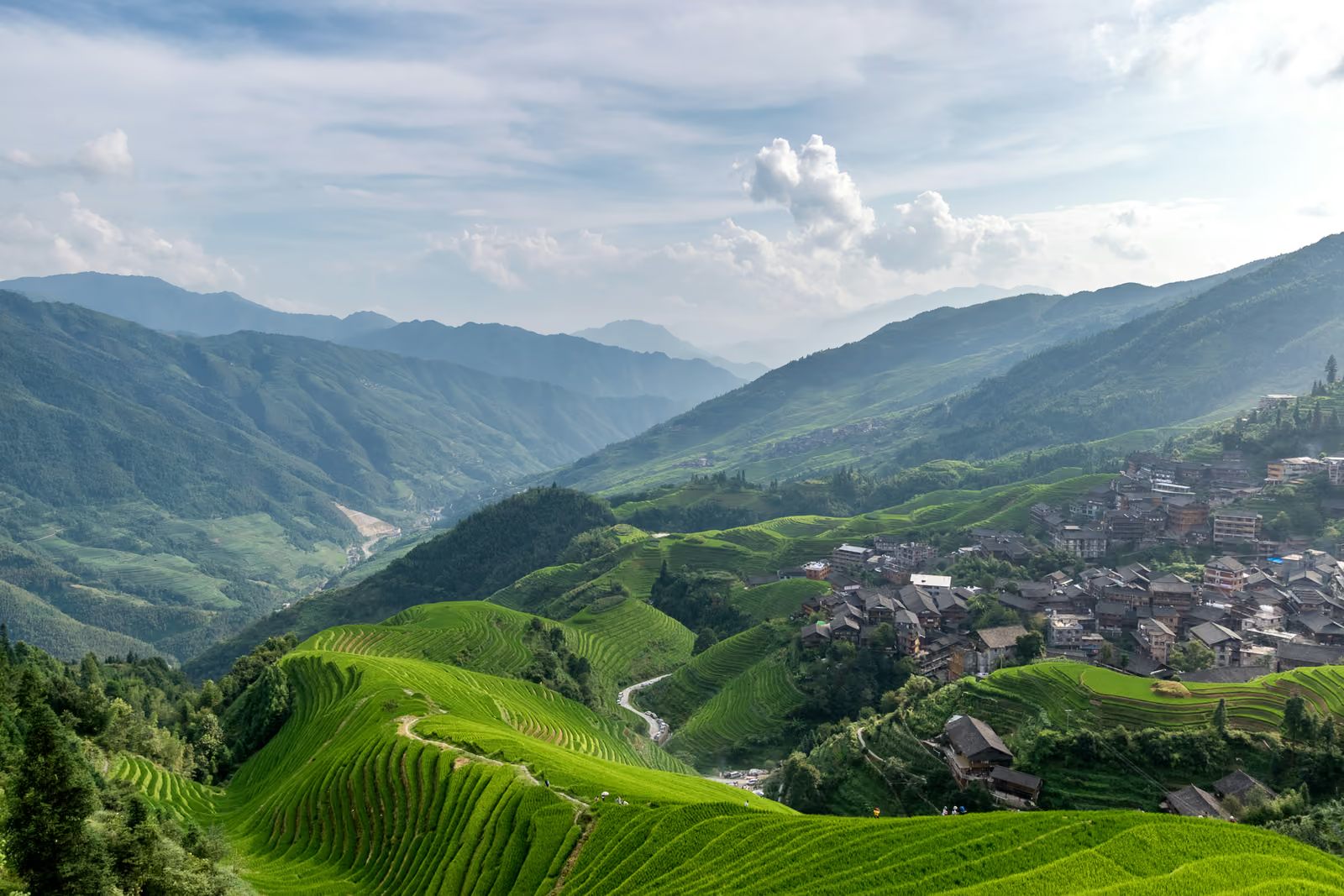
Guilin & Yangshuo 2026: Karst Landscapes, Cycling Routes & Where to Base Yourself
Go beyond the basic comparison: understand the karst geology, master the cycling routes, navigate water levels for rafting, discover cormorant fishing culture, and decide between Guilin, Yangshuo, or Xingping as your base.
Where to Stay in Shanghai 2026: 4 Neighborhoods Compared by Commute Time, Vibe & Budget